
Tin Building by Jean-Georges
Tin Building: Adaptive Reuse at the Seaport
The Tin Building by Jean-Georges brings new life to one of Manhattan’s historic waterfront structures. Once part of the Fulton Fish Market, the building was carefully dismantled, reconstructed, and reimagined as a two-level culinary marketplace while preserving its connection to the Seaport’s working past.
The result has become a notable example of adaptive reuse, earning recognition from the Urban Land Institute's New York Awards for Excellence in Adaptive Reuse. The project demonstrates how historic structures can be given new purpose without losing the qualities that make them meaningful to their communities.
Recognized with a ULI New York Award for Excellence in Adaptive Reuse, the project shows how a compromised landmark can be rebuilt for contemporary use without flattening its history. SHoP Architects led the reconstruction, with interiors by Roman and Williams and Cass Calder Smith.
Tile as Part of the Building’s New Language
Throughout the marketplace, handcrafted ceramic tile plays an important role in defining individual food halls, counters, and dining spaces. Rather than relying on a single finish, the design employs a rich collection of custom glazes and formats that contribute to the partitioned atmosphere.
Custom RAL color-matched tiles from the Cev collection were developed specifically for the project, alongside selections from Cascade Glazed Brick. Deep reds, rich blues, neutrals, and glossy whites create distinct identities across the various vendor spaces while keeping the space cohesive.
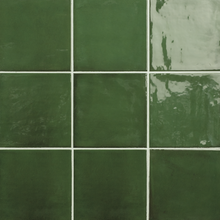
Glossy reds, greens, blues, marigolds, and warm neutrals give each dining area its own identity. The variation feels appropriate to the project: restored, layered, and built for public use rather than a single polished gesture.
For hospitality, food hall, and adaptive reuse projects, DDS can develop custom ceramics with a similar balance of durability, color, and character. Learn more about custom product solutions.